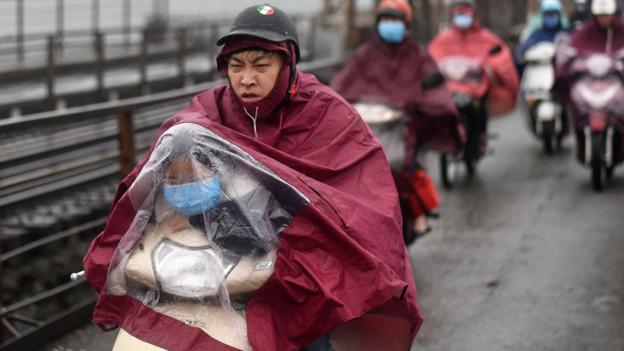
Good hand washing, social distancing and disinfecting surfaces and objects which may harbour germs are the cornerstones of limiting the spread of the virus. The “catch it, bin it, kill it” practise is as important to decreasing the spread of Covid-19 as flu. “Do the basics properly,” says Patel. “If you’re in a communal area, if you touch anything, don’t touch your face before washing your hands well.”
The NHS website contains information about the measures families can take to protect themselves from Covid-19. Unicef has produced guidance for parents on how to protect their children from catching the coronavirus.
Can families protect elderly and vulnerable relatives from being infected by children?
Yes, but it will not be easy. Of the three measures – good hand-washing, social distancing and disinfecting surfaces and objects – distancing is the only failsafe method to protect elderly and vulnerable relatives from being infected, either by children or by anyone else.
“Looking at family interactions on mother’s day, I saw loads of families with grandparents, parents and children together,” says Patel. “I think that is absolutely terrifying – the data is very clear about the high risk for severe disease in the elderly, especially those with preexisting medical conditions. Keeping children away from grandparents is just the right thing to do – why take the risk.”
In almost all circumstances, children are safe from severe Covid-19 disease – Andrew Pollard
The separation of apparently healthy children from elderly relatives may seem an unnecessarily stoic measure, however it is important to remember that while most children infected with the coronavirus show only mild signs of illness, or no signs at all, they can still transmit the virus to others.
Limiting the spread of the coronavirus and containing the Covid-19 pandemic will depend as much on the success of social and behavioural changes, as on modern medicine and scientific advances.
Why it’s important to talk to children about Covid-19
“With so much of the narrative about Covid-19 taking place at the societal level, one thing we really need parents to do is reassure their children that children are not going to die from Covid-19. It’s really important that we get this message out,” says Patel. “We know, as paediatricians, that children fear the worst but they don’t often articulate that with us.”
Pollard agrees. He suggests that parents should reassure their children that “in almost all circumstances, children are safe from severe Covid-19 disease”.
“Children and teenagers are worried for their families,” says Linnea Karlsson, a professor and child psychiatrist at the University of Turku, Finland. “We need to explain to children and teenagers that these are exceptional circumstances, and that we wouldn’t be asking them to make exceptions to their normal routines if it wasn’t.
“We need to explain to them that in situations like these we need to think about taking care of everyone, not just ourselves and our families.”

 EliteBlogtv