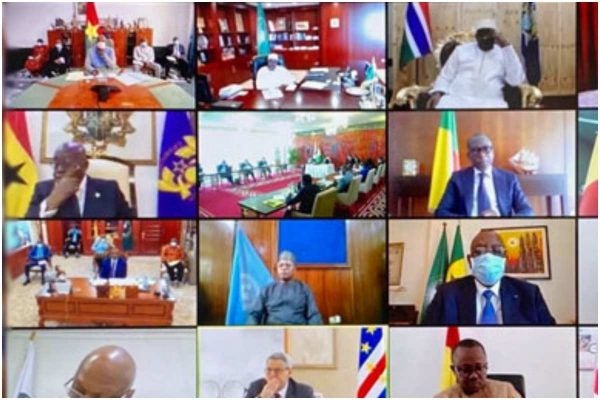
President Muhammadu Buhari appointed as the head of the COVID-19 response.
This was made known by the Special Adviser to President Buhari on Media and Publicity Femi Adesina, in a statement disclosed on Thursday.
He explained that the appointment took place at the Extraordinary ECOWAS Summit on COVID-19 which was held via teleconferencing.
The meeting was presided over by the President of the Republic of Niger and Chair of the ECOWAS Authority of Heads of State and Government, Mahamadou Issoufou.
Oby Ezekwesili insist China must pay damage to Africa for their failure to ”transparently and effectively” manage COVID-19
President Buhari, during the teleconference, called on fellow ECOWAS leaders to look beyond the challenges posed by the COVID -19 pandemic and tap into various opportunities it has presented for the betterment of lives in member states.
“In every challenging situation such as the current one, there are also opportunities,” he was quoted as saying in the statement.
The President added, “Our region must, therefore, seek to find those opportunities provided by this gloomy global outlook for its benefit by embarking on the implementation of such critical policies, which before now, will be difficult to accept.”
He called on his colleagues to intensify collaboration in order to save the region from the pandemic by sharing their experiences and best practices.
President Buhari, therefore, outlined some measures taken by his government in response to the COVID-19 pandemic.
These include the reduction of interest rates on all applicable Central Bank of Nigeria (CBN) interventions from nine to five per cent and introduction of a one- year moratorium on CBN intervention facilities, as well as the inauguration of the Presidential Task Force to coordinate national efforts to combat the spread of the virus and ensure efficiency and effectiveness in line with the Nigerian Action Plan on Health Security.
Other measures, according to the President, are provision of relief materials, including medical and food supplies, as well as conditional cash transfers of N20,000 each for poor and vulnerable households; and the establishment of more isolation centres and testing facilities to contain the spread of the disease.

 EliteBlogtv